Scanning, Researching and Rethinking Innovation in Edtech Development

The challenge in edtech is not simply to innovate but to do so with purpose. So how do organisations identify the opportunities most worth pursuing? In this piece, Prof. John Traxler draws on academic and consultancy perspectives to explore different approaches to identifying those opportunities, from brainstorming and horizon scanning to market research and AI. This article offers a broad overview and perspective on how the edtech sector can approach innovation more deliberately. 

Scanning, Researching and Rethinking Innovation in Edtech Development

Author: Prof. John Traxler, UNESCO Chair, Commonwealth of Learning Chair and Academic Director of the Avallain Lab

The Challenges

St. Gallen, May 28, 2026 – Where does our next edtech product come from? How do we spot good ideas, or create them, whilst avoiding the bad and the old ones? How do we avoid simply copying our competitors and do more than merely comply with our clients? How do we do more than enhance and improve the status quo? How do we fight off ‘stuckness’? We should also ask whether, in fact, the edtech sector differs much from other sectors where software systems are developed or perhaps any other kind of product? 

Each exists in its own world of stakeholders, regulations, procedures, traditions and resources. What distinguishes software development is that the raw materials are merely data and instructions, free and limitless, perhaps mistakenly suggesting that innovation is without cost. Its traditions and procedures have expanded, evolved and mutated incredibly rapidly, over less than a working lifetime. Together, these mean that the questions we raise do not have tried-and-tested answers. The ethos of developers is also a factor: are they hungry, visionary start-ups, or reliable, quality-conscious corporates, and how does each approach these questions?

Furthermore, edtech products that support education systems operate in contexts where multiple, conflicting stakeholders make achieving consensus on ‘good’ edtech very problematic. 

This blog addresses these kinds of questions, but as understood by an academic who has moved into the edtech sector, drawing on consultancy and research experiences, hoping to provoke questions and reactions and perhaps some changes. This reflects part of the Avallain Lab’s wider mission to foster productive relationships between academia, the sector and its clients.

A previous blog discussed the echo chamber/revolving door that seems evident in the people and processes of institutional IT procurement, and, in the current context, this may be a brake on change and innovation, excluding some technical voices and perspectives, fostering incremental quantitative improvement rather than radical qualitative transformation. Again, problematised by uncertainty about what constitutes ‘good’ edtech products in education systems that are very unconfident and uncertain about their own purpose.

Brainstorming

To start upstream, brainstorming is a recognised technique, widely described across the media, not just undisciplined musings or mutterings. Brainstorming is a creative technique for generating many new ideas about a problem or topic, focusing on quantity over quality initially, deferring judgement, encouraging wild ideas and building on others’ suggestions in a free-flowing, often group-based session. The basic rules are: 

  • Suspend judgement during the initial phase; don’t let criticism kill the momentum.
  • Encourage wild ideas; they contain the seed of a practical, breakthrough feature.
  • Go for quantity; clear out the obvious ideas to reach the innovative ones underneath.
  • Combine and improve participants’ ideas; transform simple ideas into better ones, building on shared contributions. 

Common sense suggests the best number of people to be involved is fewer than perhaps ten, to avoid chaos and confusion, and ‘hiding’, but more than perhaps five, to avoid stagnation. Still, clearly, composition is important, with similarity and homogeneity fostering candour and spontaneity, whilst differences in hierarchy might be inhibiting. There is, however, an argument for neurodiversity or diverse cognitive styles, but all this presupposes a large enough pool of potential participants in which to make these kinds of choices. Obviously, the physical setting is important; different settings all send different signals to different demographics and cultures, as does the timing. One possibility is the away-day format, cut off from daily pressures and obligations, and a moderator might prevent groupthink and give space to quieter, tentative voices. There is perhaps some overlap with the heuristics for effective focus groups, including tips for effective moderation that ensure a free-flowing, non-judgemental event.

Incidentally, boredom too has its uses, all the more so as phones and computers often keep it at bay, creating opportunities for creativity or originality.

These established formats and prescriptions for effective brainstorming are mostly pre-COVID and assume that working and meeting face-to-face are the norm. This is clearly no longer the case with many people, perhaps the more creative or imaginative, who are either working online from home or digitally nomadic. Their varied individual settings, disruptive external events, such as a delivery at the door, lunch burning and the changed cues, language and tacit protocols of online interaction, might not be so conducive to spontaneity or candour.

Perhaps the move of the Delphi technique events from face-to-face synchronous to asynchronous online, for all sorts of pragmatic reasons, might suggest a compromise format that reconciles individual creativity with group interactivity, with the added bonus of the latter being digitally recorded and preserved. 

Whilst these might be prescriptions for effective brainstorming, they do not address when to brainstorm in relation to any product development cycle or how to feed the outcomes into the mainstream of developments; there are presumably good ways and bad ways, and at the risk of going off at a tangent, this looks like an opportunity for ‘diffusion of innovations’ approaches to find the good ways and the factors that determine which best way.

Horizon Scanning

Horizon scanning is a way of spotting possibilities coming towards us, for example, of managing those possibilities that brainstorming has surfaced.

Some background: several years ago, I collaborated with Alison Potter from the TEL division of Health Education England (South), part of the UK NHS, to review horizon scanning and to formalise and embed it in their routines. Horizon scanning attempts to spot concepts, opportunities and technologies before they reach the market (and before they reach the competitors, hoping to catch the next Teflon or Post-it before they do), especially those not immediately and obviously relevant, the ones off in left field. 

The work examined organisations comparable in size and technology to the NHS, including the UK government’s Cabinet Office, and distilled their procedures into a set for the NHS. Our initial research question was, ‘What models exist for identifying and then prioritising which new and emerging technologies might add value to healthcare education in the UK?’ We conducted a literature review of horizon-scanning methods to identify existing models and systems. Then we conducted interviews with six experts across education, government, healthcare and the independent strategic foresight sector. The findings from the literature shaped the interview design. Interviews comprised of three parts: a short experiment to gauge how each expert horizon scans, their reaction to our proposed framework and lastly, their thoughts on the skills and tools necessary to horizon scan.

Alison’s final version of the horizon-scanning framework, the culmination of the whole research process, features a sequence of several distinct activities, and her paper goes into greater detail. 

  • Identification, or scanning a defined set of sources, addressing what is out there
  • Classifying, or filtering, then prioritising, addressing what is relevant
  • Assessing, addressing, what is its potential impact
  • Disseminating, or navigating, addressing where it needs to go
  • Evaluating, or reflecting, addressing how we do it better

And then, start again, perhaps on some predetermined cycle time matched to the organisational timescales and responsiveness. 

We should, however, always bear in mind, when defining the sources to be scanned, assessing the impact of any discoveries and disseminating them, that any such discoveries need to align with various commercial, technical and organisational factors. These factors might include the headroom and skill set among staff, the alignment with the existing product portfolio and client base, and the organisation’s management of change. These factors are, in effect, among those identified in the diffusion of innovations community, a body of expertise stretching back many decades, tackling innovations from new technical products to changed farming practices to improved attitudes to smoking and drink-driving. In this context, the ‘innovation’ is the horizon-scanning discovery. Diffusion of Innovations work in its various forms over the years looks at factors such as the characteristics of the people involved, perhaps the developers inside edtech or the clients outside, whether they are naturally risk-taking or risk-averse, the development, whether it can be deployed without a tangle of interoperability issues, whether it can be easily explained and understood (and sold), the nature of any competitive advantage, so on.

It does, however, leave the sources to be scanned unanswered. Horizon scanning is one; others might exploit the expertise and experience of researchers, described briefly later, exploiting their literature searching skills, their contacts and their colleagues, and also their intuitions and ability to pick up ‘weak signals’.

Market Research

Looking now at market research as another source of innovative ideas, I am deeply indebted over the years to the work of Gordon Rugg on knowledge and its elicitation, in every kind of research that involves people, meaning clients, users, learners and the wider market. This work recognises that people know, believe and feel all sorts of different things and that finding out what they are thus requires all sorts of different techniques and tools. This work is expressed as the ACRE, ACquisition of REquirements, framework, a tabulation that goes from every type of knowledge or feeling or value to the most effective tool or technique for eliciting it, from the conventional, namely surveys, questionnaires, etc., to the ‘contrived’, such as card sorts, rep grids and laddering, to the physical, such as models and prototypes. Within this overarching framework, there is still the need for adaptation, refinement and common sense, so don’t ask compound or double-negative questions; do make sure participants are not hungry, uncomfortable or embarrassed and so on.

In my work, I have often lambasted ‘the usual suspects’ of social science (and market research), namely the focus group, the interview, the questionnaire and the survey, rounded up unthinkingly to answer every conceivable question, as ethically problematic, methodologically deeply flawed and usually inappropriate. 

Without unpacking and explaining all of the alternatives to the ‘usual suspects’, which you can unpack here, it might suffice to say that asking questions only provides the answers to those questions, even assuming the respondent is able and willing to give an adequate, honest answer, rather than finding out what is actually important to the respondent. Furthermore, asking questions about desirable futures only elicits answers based on modified presents and remembered pasts rather than any radically reimagined futures. 

These are the weaknesses in expecting clients or users – actually, users are not always asked, often their managers or IT do so on their behalf  – to guide future products or projects; merely asking them will likely elicit only requests for what they already have, but faster, easier, bigger or bug-free. So perhaps academic research can represent a more rigorous version of market research?

‘Real’ Research

Separating market research from ‘real’ research is an artificial and unnecessary distinction, since both should be activities aimed at acquiring, analysing, understanding and contextualising what people know or want or feel in ways that are trustworthy, cheap, appropriate, ethical and efficient. Both can suffer from exactly the same flaws because each, in its own sphere, is subject to very similar pressures and constraints. The distinction might in fact be between the people, the market research researchers on the one hand and academic researchers on the other, and on the expectations, timescales and resources around their different professions. The question here is, what can academic researchers contribute?  

Two things, really, namely, what might be called primary and what might be called secondary research, the former being actually doing stuff, conducting empirical studies, setting up interventions, taking measurements, listening to people, building prototypes and running workshops, the latter being connecting with the outputs and activities of the people who are doing primary research, using experience and expertise, to understand what is happening and what might be useful, an informal version of horizon scanning in practice.

It has to be said that primary research, especially in the context of commercial edtech, is probably a waste of time, since any commercial advantage is likely to be small and short-term, though it may have value as an agent of culture change within an organisation, raising awareness of methods and limitations, and this may be something of indirect commercial value. There is a far better case for secondary research since it spreads the risks and costs and is perhaps a semi-intuitive version of horizon-scanning, based on gut feelings and looking for otherwise undetected ‘weak signals’. This rationale underpins the Avallain Lab, built on expertise and experience that a search engine or chatbot can’t simulate and tapping into contacts and colleagues before their work hits the public domain. This model is still being refined.

Process Maturity

To go off at a tangent, process maturity models have recently been spotted being applied to AI development, though not yet to educational AI development, and that may be an important or provocative opportunity.  

Process maturity and its models are ways of describing how well an organisation handles bugs, mistakes and mishaps. If an organisation just deals with them as they crop up, it might be categorised as relatively immature. It may, however, document or record them, perhaps analyse and reflect on them, and have procedures for analysis and reflection, and indeed departments and specialisms for doing this, indicating a progressively more mature organisation. These stages have been formalised as process maturity models, progressing from chaotic (Level 1) to consistently effective and optimised (Level 5), using models to standardise procedures, enhance quality, boost efficiency and ensure scalability to achieve strategic goals (and, accordingly, to gain certification). This approach was adopted in large-scale software development in the 1990s; for example, the Capability Maturity Model of the 1980s. Also, later, in courseware development and now, it seems, in some AI development and perhaps next in future edtech development, why not?

The relationship between notions of process maturity and the other earlier topics is, however, oblique; the first ones talk about qualitative or strategic jumps, thinking ‘outside the box’, about breaking away from the established trajectory, whereas the last one talks about incremental quantitative or technical improvement, about moving along the established trajectory but more effectively and efficiently, ‘inside the box’. They must, however, be reconciled; otherwise, organisations risk either forever improving the past or never shaping the future. 

The way forward may be to treat brainstorming and horizon scanning as processes in their own right, ones that, on reflection, could be monitored and measured and thus improved, but also then feed into roadmaps. In essence, the way forward must reconcile the tensions between the ‘stay hungry’ of start-ups and the quality assurance expected of established organisations.

Artificial Intelligence

These are all largely pre-digital accounts, and we should now perhaps look for digital tools that capture these methods and techniques, especially for AI tools, the generative ones that answer our questions and the agentic ones that execute our processes. At the moment, however, the best advice might be to proceed with caution. Current AI, working on probabilistic mechanisms, risks emphasising the existing norms rather than breaking away from them; perhaps ‘hallucinations’ have a part to play. One under-researched area comprises scenarios depicting how society, its education systems, the economy, its labour markets and the workforce and their skill sets will evolve under the impact of artificial intelligence. In their different ways, these all form the contexts of edtech products and how they are developed.

Finally

This piece outlines how disparate techniques from disparate communities might have productive synergy. Each technique, and probably others, deserves greater attention in order to explore adaptation and integration. Taken together, they offer useful perspectives on how edtech organisations might think more deliberately about identifying meaningful opportunities, challenging established assumptions and navigating future change. The impact of AI is currently limited to answering questions and making discrete activities more efficient. Clearly, it won’t stop there.


About Avallain

For more than two decades, Avallain has enabled publishers, institutions and educators to create and deliver world-class digital education products and programmes. Our award-winning solutions include Avallain Author, an AI-powered authoring tool, Avallain Magnet, a peerless LMS with integrated AI, and TeacherMatic, a ready-to-use AI toolkit created for and refined by educators.

Our technology meets the highest standards with accessibility and human-centred design at its core. Through Avallain Intelligence, our framework for the responsible use of AI in education, we empower our clients to unlock AI’s full potential, applied ethically and safely. Avallain is ISO/IEC 27001:2022 and SOC 2 Type 2 certified and a participant in the United Nations Global Compact.

Find out more at avallain.com

_

Contact:

Daniel Seuling

VP Client Relations & Marketing

dseuling@avallain.com

Applying CEFR Principles in Practice with TeacherMatic and the New CEFR Alignment Course

The latest Language Teaching Takeoff webinar welcomed back award-winning educator and edtech specialist Nik Peachey, who explored how language educators can make more informed CEFR alignment decisions using practical resources and purpose-built AI tools designed specifically for language teaching.

Applying CEFR Principles in Practice with TeacherMatic and the New CEFR Alignment Course

London, May 2026 – In ‘Make Informed CEFR Alignment Decisions in the Age of AI,’ Nik introduced the new free ‘CEFR Alignment for Teachers: In the Age of AI’ course and demonstrated how teachers can use TeacherMatic to create, adapt and evaluate CEFR-aligned content while maintaining professional judgement.

Moderated by Giada Brisotto, Senior Marketing and Sales Operations Manager at Avallain, the session focused not only on strengthening teachers’ understanding of CEFR principles, descriptors and benchmarking, but also on applying that knowledge in practice through dedicated AI generators designed for language education.

Why Generic AI Does Not Always Meet CEFR Alignment Needs

Passionate about using technology to support both teachers and learners, Nik Peachey opened the session by acknowledging the growing role AI can play in language education. However, he also made a clear distinction between generic AI tools and solutions designed specifically for language teaching.

For Nik, the challenge with CEFR alignment is precision. The CEFR is not simply a set of levels to select from, but an outcomes-based framework built around descriptors, language skills and learner performance. Accurate alignment requires interpretation, context and professional judgement.

This is why Nik highlighted the value of specialised AI toolkits such as the TeacherMatic Language Teaching Edition. With dedicated language teaching AI tools, CEFR alignment is a central consideration. Rather than relying on broad, generic outputs, these pre-programmed AI generators are designed to align with framework descriptors and intended learning outcomes, empowering educators to create, adapt and evaluate framework-based materials with greater confidence.

Practical CEFR Resources for More Confident Decision Making

Recognising that informed CEFR alignment depends on informed teacher judgement, Nik introduced the new free CEFR alignment for teachers course as a practical resource for educators looking to strengthen their understanding of the framework.

Developed in collaboration with the Norwich Institute for Language Education (NILE) and delivered on Avallain Magnet, the interactive course is designed to be flexible and easy to navigate, allowing educators to move at their own pace, assess their progress and build confidence in applying CEFR principles more effectively.

As Nik noted, the CEFR overview and foundational quiz offer a useful reality check, helping educators assess what they already know before progressing into deeper CEFR concepts and practical application.

An Interactive Approach to CEFR Alignment

Nik then walked attendees through the course itself, highlighting its practical, flexible design and immediate relevance for language educators working with CEFR.

As Nik demonstrated, the course goes beyond theory, allowing educators to engage directly with the CEFR framework. Participants can explore how descriptors differ across levels from A1 to C2, examine the defining features of each scale and strengthen their understanding of how language proficiency is described in practice.

One particularly valuable area Nik highlighted was mediation, now recognised as a fifth skill area alongside reading, writing, listening and speaking. The course allows educators to explore how learners communicate understanding, negotiate meaning and bridge communication gaps, areas that are becoming increasingly important in modern language teaching.

Interactive activities encourage educators to work directly with descriptors, assess whether tasks align above or below a chosen level and strengthen their ability to benchmark materials more accurately, including distinctions within the often more nuanced ‘plus’ levels.

Nik described the course as a particularly valuable resource for educators involved in CEFR teaching, benchmarking and assessment, helping build the confidence needed for more accurate, informed decision-making.

From Understanding to Practical Content Creation with TeacherMatic

With the foundations of CEFR alignment established, Nik then demonstrated how that knowledge can be applied in practice using the TeacherMatic Language Teaching Edition.

Designed specifically for language educators, TeacherMatic’s AI generators are built around CEFR-informed, outcomes-based principles. This enables teachers to create materials aligned to learner levels and specific teaching contexts.

Nik demonstrated the ‘Create a Text’ generator, using the example of a sustainability-focused news article aligned to a C2 proficiency level. Educators can define learner profiles, in this case adults, alongside optional supporting materials and additional learner needs to shape outputs more precisely.

Nik highlighted the generator’s flexibility. Rather than accepting an output as final, teachers can further enhance and adapt the content using the ‘Refine’ feature, whether by introducing target vocabulary, adjusting complexity or incorporating short dialogue to suit a specific teaching context better.

Adapting Content for Different CEFR Levels

Nik then demonstrated how the same content could be adapted for a completely different level of learning using the ‘Adapt your Content’ generator.

Using the previously generated C2 sustainability article, he selected the option to align the content with A2 learners, with a secondary learner profile. The result was a noticeably simplified version, with shorter sentences, more accessible vocabulary and content more appropriate for learners at that proficiency stage.

As with the earlier example, refinement remains an important part of the process. Teachers can continue adjusting outputs, learner needs or language goals.

Nik also suggested the ‘CEFR Level Checker’, particularly when working with self-created content. By checking whether a text aligns with the intended CEFR level, educators can make more informed decisions before bringing materials into the classroom.

Stronger CEFR Alignment Starts with Better Foundations

The CEFR remains one of the most widely adopted frameworks in language education, but effective alignment depends on more than selecting a level or generating content that appears appropriate on the surface. Inconsistent interpretation or inaccurate application can impact the quality of learning materials and, ultimately, learner progress.

As Nik demonstrated in this session, combining strong professional knowledge with practical resources and purpose-built AI tools gives educators a far more confident and effective way to approach CEFR alignment.

With interactive learning resources such as the CEFR alignment course and dedicated TeacherMatic AI tools, educators are better equipped to create, adapt and evaluate materials that genuinely reflect learner needs, supporting more meaningful progression, clearer communication and stronger learning outcomes.

Register for the Free CEFR Alignment Course

Strengthen your understanding of CEFR principles with this free, interactive course, designed to build confidence in interpreting descriptors, benchmarking learners and making more informed alignment decisions.

Learn more and register for free here

Explore the TeacherMatic Language Teaching Edition

The TeacherMatic Language Teaching Edition includes dedicated CEFR-aligned AI generators to support the creation, adaptation and evaluation of language teaching materials across different learner levels and contexts. Educators can adopt AI safely and responsibly while maintaining full professional control.

Discover more here

Next in the Webinar Series:

Boost Learner Confidence with Engaging, Targeted IELTS-Style Practice Materials

🗓 Thursday, 11th June

🕛 12:00 – 12:30 BST (13:00 – 13:30 CEST)

Click here to register and secure a spot

Join Joanna Szoke, freelance teacher trainer and AI in education specialist, for the next Language Teaching Takeoff Webinar.

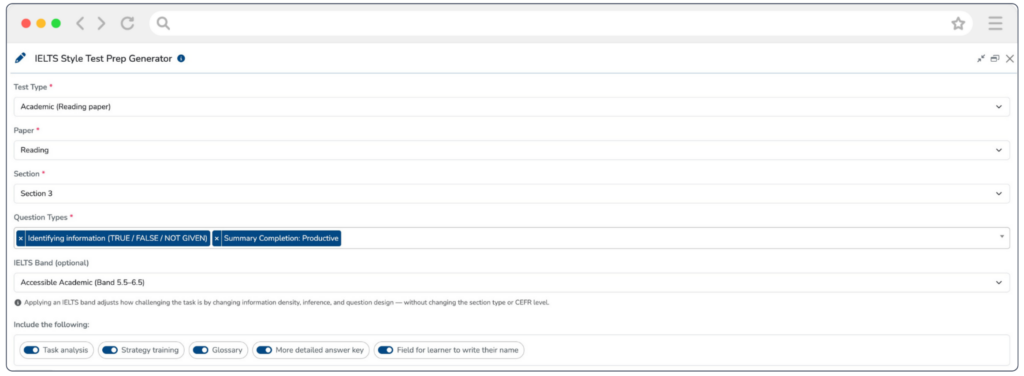
See how TeacherMatic’s ‘IELTS Style Test Prep Generator’ can support more efficient creation of adaptable IELTS practice materials while strengthening learner preparation.


About Avallain

For more than two decades, Avallain has enabled publishers, institutions and educators to create and deliver world-class digital education products and programmes. Our award-winning solutions include Avallain Author, an AI-powered authoring tool, Avallain Magnet, a peerless LMS with integrated AI, and TeacherMatic, a ready-to-use AI toolkit created for and refined by educators.

Our technology meets the highest standards with accessibility and human-centred design at its core. Through Avallain Intelligence, our framework for the responsible use of AI in education, we empower our clients to unlock AI’s full potential, applied ethically and safely. Avallain is ISO/IEC 27001:2022 and SOC 2 Type 2 certified and a participant in the United Nations Global Compact.

Contact:

Daniel Seuling

VP Client Relations & Marketing

dseuling@avallain.com

What Makes Feedback Meaningful and How Can AI Enhance Teacher-Led Delivery

In this latest Language Teaching Takeoff Webinar, Joanna Szoke, AI in education specialist and freelance teacher trainer, discussed the importance of feedback in the learning journey and explored the role TeacherMatic can play in supporting teachers with meaningful input.

What Makes Feedback Meaningful and How Can AI Enhance Teacher-Led Delivery

London, April 2026 –  In ‘Provide Meaningful, Timely Feedback at Scale with the Power of AI’, Joanna Szoke examined the role feedback plays in learner progress, focusing not just on providing it, but on what makes it truly impactful. She also introduced and demonstrated the new TeacherMatic ‘Advanced Feedback’ generator, showing how it can empower teachers to deliver feedback at scale, save time and use AI in a safe, ethical and teacher-led way.

Moderated by Giada Brisotto, Senior Marketing and Sales Operations Manager at Avallain, the session focused on how feedback should do more than comment on performance. It should motivate, inspire and give learners clear opportunities to improve and progress.

Feed Forward, Not Just Feedback

One of Joanna Szoke’s favourite topics, and a key area of expertise, is feedback and assessment in language teaching. She opened the session by asking an important question: what makes feedback useful?

Joanna wanted to reiterate that effective feedback should do more than just review performance; it should help students move forward. Feedback should support progress and build confidence. 

She also highlighted the importance of timing and specificity. Feedback is most valuable when learners can still act on it and when it includes clear explanations, relevant examples and practical actions for improvement.

Finally, Joanna suggested that feedback can also come from self-reflection and peer review. This shift to student-centred learning allows for greater ownership and even reduces teacher workload. 

Reducing Workload Without Reducing Quality

Feedback is not only important, but also one of the most time-consuming responsibilities. Alongside approaches such as self-assessment and peer review, Joanna wanted to demonstrate how TeacherMatic can enable teachers to reduce workload while still delivering impactful, effective feedback.

She introduced the new ‘Advanced Feedback’ generator. Designed to support teachers while keeping professional judgement central, it streamlines feedback workflows without compromising quality. Key features include bulk uploads, Cambridge English alignment, customisable criteria, support for handwritten submissions and annotated feedback for text-based work.

With a simple setup process, teachers can create an assignment, upload the brief or paste instructions, then choose criteria-based feedback, annotated feedback or both.

For criteria-based feedback, teachers can select their own criteria or Cambridge English criteria, with options such as Accuracy and Grammar, Vocabulary and Word Choice, Coherence and Cohesion and Fluency and Communication. Teachers can also select CEFR levels before saving the assignment and inviting submissions.

Feedback at Scale, Teachers in Control

Once assignments are created, teachers can upload one submission or bulk-upload multiple pieces of student work, making it far easier to manage feedback at scale.

Joanna highlighted that efficiency should never come at the expense of responsibility. When using AI to assess or evaluate student work, teachers should be transparent with learners and seek consent before uploading submissions.

She also emphasised that the generator is there to support the feedback process, not replace it, explaining that it should ‘help me with feedback, not produce the entire feedback’, and reinforcing the importance of keeping teachers as active participants throughout the process. Teachers should review outputs, refine responses and make the final professional judgement before anything is shared with students.

Practical Outputs for Teachers and Learners

Joanna then explored the structure of the feedback provided. It is practical, clear and ready to refine.

A dedicated For Teacher view provides a more detailed breakdown, including performance against selected criteria, recognised strengths, areas for improvement and a corresponding CEFR level. Teachers also receive a written summary of the submission, alongside suggested next steps to guide future progress.

The For Student view uses more targeted language with phrasing such as ‘You can form basic sentences, but check your verb tenses.’ This creates feedback that is more personal and easier for students to act on.

Taking Feedback Further

While useful and impactful feedback has been generated, Joanna recognises that it may still need a follow-up activity to reinforce learning, such as a gap-fill activity. The refine option allows teachers to do this. They can adapt the tone, ask to increase motivation or generate additional tasks tailored to specific learner needs.

For example, teachers can request extra practice activities that target recurring mistakes. This can turn feedback into continued learning rather than a final comment.

She also demonstrated the highly practical option of uploading handwritten PDF submissions, recognising that handwritten work remains common in many teaching contexts and continues to offer value for learners.

Joanna then showcased the power of annotated feedback for text-based submissions, where comments are automatically added directly to the student’s work. These annotations can be edited, removed or expanded with the teacher’s own feedback, creating a fast and flexible way to personalise responses.

When sharing feedback with learners, teachers can export it as a PDF or copy it into a Word document for further editing. As Joanna noted, this allows teachers to retain the human element while benefiting from a more efficient workflow.

Putting Teachers and Feedback at the Centre of the Learning Journey

As Joanna highlighted throughout the session, TeacherMatic is far more than a generic AI tool; it is designed specifically for language teaching workflows. The Language Teaching Edition has been built specifically for language educators, with over 50 purpose-built generators designed to make language teaching faster and more effective.

The new ‘Advanced Feedback’ generator is a clear example of this. It reduces the workload of delivering detailed feedback by empowering teachers to provide timely, meaningful feedback at scale.

Rather than replacing professional judgement, the generator strengthens it. Teachers set the criteria, review outputs, refine responses and decide what is ultimately shared with learners. The result is a more efficient workflow that saves time, supports consistency and places teachers and feedback where they belong, at the centre of the learning journey.

Explore the TeacherMatic Language Teaching Edition

From planning CEFR-aligned lessons and creating high-quality activities to implementing structured feedback workflows and more, the TeacherMatic Language Teaching Edition is built on recognised language teaching methodologies and developed with input from the International House World Organisation, NILE, Eaquals and English UK.

Designed as a safe and ethical AI toolkit for language teachers, it delivers reliability, strong pedagogical alignment and outputs created for use inside and outside the classroom.

Discover more here

Next in the Webinar Series:

Make Informed CEFR Alignment Decisions In the Age of AI

🗓 Thursday, 14th May

🕛 12:00 – 12:30 BST (13:00 – 13:30 CEST)

Join award-winning educator Nik Peachey as he introduces the new ‘CEFR Alignment for Teachers: In the Age of AI course.

See how to apply CEFR principles in a structured, practical way using TeacherMatic. Learn how to make informed decisions, maintain pedagogical integrity and adapt outputs to different learner contexts while retaining full professional control.

Click here to register and secure a spot


About Avallain

For more than two decades, Avallain has enabled publishers, institutions and educators to create and deliver world-class digital education products and programmes. Our award-winning solutions include Avallain Author, an AI-powered authoring tool, Avallain Magnet, a peerless LMS with integrated AI, and TeacherMatic, a ready-to-use AI toolkit created for and refined by educators.

Our technology meets the highest standards with accessibility and human-centred design at its core. Through Avallain Intelligence, our framework for the responsible use of AI in education, we empower our clients to unlock AI’s full potential, applied ethically and safely. Avallain is ISO/IEC 27001:2022 and SOC 2 Type 2 certified and a participant in the United Nations Global Compact.

Contact:

Daniel Seuling

VP Client Relations & Marketing

dseuling@avallain.com

New CEFR Alignment Course Developed in Collaboration with NILE

Avallain has launched ‘CEFR Alignment for Teachers: In the Age of AI’, a new online course for language teachers, developed in collaboration with CEFR specialists Dr Elaine Boyd and Thom Kiddle at Norwich Institute for Language Education (NILE). Available on Avallain Magnet, the course officially launches at IATEFL 2026 and supports teachers in applying CEFR principles to AI-generated and classroom materials with confidence.

New CEFR Alignment Course Developed in Collaboration with NILE

St. Gallen, April 2026 – ‘CEFR Alignment for Teachers: In the Age of AI’, a free, interactive course, is now available on Avallain Magnet, our peerless, AI-integrated learning management system. It will be officially launched at the IATEFL International Conference and Exhibition 2026 (21st–24th April). 

Developed through the shared efforts of the Avallain team and CEFR specialists Dr Elaine Boyd and Thom Kiddle at NILE, it helps language teachers align, evaluate and adapt generated texts, while strengthening their ability to make pedagogically sound decisions for learners at different CEFR levels.

A Framework That Continues to Shape Language Education

In 2001, the Common European Framework of Reference for Languages (CEFR) marked a defining moment in language education. It established a standard framework for describing language proficiency and achievement. Over the past 25 years, we can see its significant impact across course design, level benchmarking, assessment frameworks and published learning materials. 

While the CEFR has been widely used, alignment has not always been done consistently or transparently. In some instances, claims of CEFR alignment are not clearly substantiated or supported by defined principles or practices. This raises important questions about validity and professional accountability, which this course aims to address by deepening understanding and improving alignment decisions.

CEFR Alignment in the Age of AI

The rapid growth and adoption of AI in language education were another key driver behind the creation of ‘CEFR Alignment for Teachers: In the Age of AI’. Teachers can now generate context-specific, personalised learning materials more quickly than ever. This creates new opportunities to adapt content to learners’ needs with greater speed and flexibility. 

However, as seen in past misuse of the CEFR, the availability of these tools does not in itself ensure that materials are appropriate for a given level. The risk of misalignment remains, particularly where outputs are not evaluated against the descriptors, scales and principles that underpin the framework.

The course addresses this challenge and reinforces the need for informed teacher judgment by strengthening teachers’ knowledge and skills in applying the CEFR. Its aim is to build confident teachers who can make sound decisions and ensure that alignment claims are both pedagogically sound and professionally defensible.

Flexible Learning, Grounded in Practice

During the course, language teachers will gain a broad understanding of the CEFR’s scope, familiarise themselves with specific levels and scales and ultimately deepen their knowledge of its structure.

Delivered on Avallain Magnet, this course is flexible, interactive and self-paced. It will strengthen teachers’ confidence in deciding how to use texts for learners at different CEFR levels and enhance their understanding of how to adapt AI-generated texts and tasks for specific scales. 

As CEFR alignment expert Dr Elaine Boyd explains, ‘This course is designed to really help teachers align the CEFR scales and descriptors with the specific needs of their classes. And the great thing is, teachers can dip in and out of it when they have time and build their skills at their own pace.’

From Understanding to Informed Application

The course provides an overview of the CEFR, introducing its descriptors, their defining features and how one level differs from another.

Through interactive modules, participants will engage with illustrative descriptors, analyse authentic written and listening texts and practise discriminating between descriptors at different levels in the same scale, including the ‘plus levels’. 

David Moxon, Learning Technology Specialist and Content Developer at Avallain, who helped develop and publish the course on Avallain Magnet, explains, ‘While it is important for participants to gain a broad understanding of the CEFR framework, it is equally critical that they engage with it. Interactive exercises, such as benchmarking tasks, will help translate theory into practice. The learning environment also offers the opportunity for teachers to assess their progress throughout the course and evaluate their confidence in a final self-assessment.’

As AI becomes part of everyday language teaching, this course supports teachers in working more effectively with AI-generated content and is designed to complement the use of the TeacherMatic Language Teaching Edition, a trusted AI toolkit that empowers language educators ethically and safely.

Our collective efforts were not to deny the role of AI, but rather to reinforce the importance of professional judgement and ensure that alignment decisions are informed by context, pedagogy and a clear understanding of the framework. 

Reflecting on the course design, Thom Kiddle, NILE Director and CEFR specialist, notes, ‘We really enjoyed designing the course and thinking creatively about how to draw teachers’ focus to the horizontal dimension of the CEFR across all the different modes of communication, and to really engage with the way the individual descriptors are worded and what that means for learner language ability.’

Designed to Support Professional Growth

This course is intended for language teachers who are already familiar with the fundamentals of the CEFR and are looking to deepen their understanding and strengthen their practical application of it. It is also relevant for academic managers, senior teachers, syllabus designers and edtech coordinators involved in curriculum development and learning design.

While no prior knowledge of AI is required, the course recognises the growing role of AI content in language education and supports teachers working with both AI-generated and traditionally developed materials.

Official Launch at IATEFL 2026

From the 21st to the 24th of April, the Avallain team will attend the IATEFL International Conference and Exhibition 2026 in Brighton (UK). This event will bring together English language teaching professionals and enthusiasts from around the world, providing an excellent opportunity for the official launch of ‘CEFR Alignment for Teachers: In the Age of AI’.

The course reflects a joint commitment to an honest and professional approach to working with the CEFR, supporting educators in making sound, evidence-based decisions for learners at every level.

Learn more about the course and register here


About NILE

NILE is one of the world’s biggest providers of training and development for English language teaching. Based in the UK and working internationally, NILE provides expert-led programmes online and in person, supporting educators, institutions and ministries worldwide. They are regularly involved in the development and implementation of large-scale education reform projects around the world.

NILE is a member of English UK and holds accreditation from the British Council, Eaquals and AQUEDUTO, reflecting its commitment to quality, professional standards and responsible practice.

About Avallain

For more than two decades, Avallain has enabled publishers, institutions and educators to create and deliver world-class digital education products and programmes. Our award-winning solutions include Avallain Author, an AI-powered authoring tool, Avallain Magnet, a peerless LMS with integrated AI, and TeacherMatic, a ready-to-use AI toolkit created for and refined by educators.

Our technology meets the highest standards with accessibility and human-centred design at its core. Through Avallain Intelligence, our framework for the responsible use of AI in education, we empower our clients to unlock AI’s full potential, applied ethically and safely. Avallain is ISO/IEC 27001:2022 and SOC 2 Type 2 certified and a participant in the United Nations Global Compact.

Find out more at avallain.com

_

Contact:

Daniel Seuling

VP Client Relations & Marketing
dseuling@avallain.com

Closing the Gap Between Formal and Informal Digital Learning

Digital learning has evolved significantly over the past few decades, shaped by virtual learning environments, the rise of open, networked technologies and, more recently, the emergence of AI. In this piece, Prof. John Traxler examines the divide between the quality-assured environments of formal education and the more open and less structured world of informal digital learning. He highlights both the challenge and opportunity to develop a balanced space between the extremes, one that requires learners to develop key skills such as criticality, curation, metacognition and reflection, and raises questions about responsibility and opportunity.

Closing the Gap Between Formal and Informal Digital Learning

Author: Prof. John Traxler, UNESCO Chair, Commonwealth of Learning Chair and Academic Director of the Avallain Lab

St. Gallen, March 30, 2026 – This piece is based largely on experience, research, writing and analysis of education beyond compulsory schooling (typically from age 16), mostly in the UK, Western Europe and similar international education systems; other sectors and other countries will have their own versions, but are still driven by underlying social, financial, technical and political factors, albeit differently across contexts. The piece aims to present a different perspective on digital learning from the more conventional one and, in doing so, may, in a relatively small space, simplify and generalise; but it is the perspective that matters, and the challenge and opportunity it represents.

The Dawn of Digital Learning

Many years ago, probably for the course of the decade straddling the turn of the century, if learners wanted to access digital educational resources and opportunities, they could only do so as students of some kind of formal education from an established education provider. The World Wide Web existed and was populated by institutions, corporations and organisations, often using the emerging technology of the Virtual Learning Environment (VLE), aka Learning Management System (LMS), such as Blackboard, WebCT or the open-source Moodle. This was their only access, which meant the institution could define what was learnt, how it was to be learnt and what behaviour was acceptable; the institution controlled the hardware, software and infrastructure. 

Pedagogies, Espoused and Enacted

Interestingly, the rapid emergence of digital learning technologies and the expansion of higher education led to the professionalisation of teaching, no longer an essentially amateur activity by researchers in elite universities. It also led to the increased visibility of teaching, no longer confined to the privacy of the face-to-face seminar room. Not only was there the expectation that academics would learn to teach and be certified once they had, but the theorising of teaching should become much more explicit, no longer intuitive but conceptualised. 

In particular, the component technologies of the VLE, such as the chat and webinar functions, were portrayed as vehicles for social constructive pedagogies, in which learners would interact and engage with each other, and for constructivist pedagogies, in which individualised learning would build on individual understandings. Gone were the days of learners being given content to absorb and retain; instead, their understanding was built on and was valued. Lecturers, it was proposed, would mutate from ‘the sage on the stage’ to the ‘guide by your side’, taking on a more facilitative role rather than acting as the primary source of knowledge.

The VLE did ensure consistency and efficiency; it seemed to allow teaching to be visible and thus monitored, and different lecturers to be swapped into and out of courses according to staffing; it also encouraged the expansion of distance learning, but this in fact offered little competitive advantage since every institution had the same idea and global markets already had global players. 

Many years ago, I remarked to South African colleagues that making students use a VLE was like making them wear a school uniform. The reaction was, ‘What’s wrong with a school uniform?’ So, yes, I understood the need for consistency, equity, stability and quality assurance, but it is not adequate preparation for fashion choices, dress codes and expressing individuality through adult clothing. In other words, structured systems ensure fairness, but not independence.

Unfortunately, institutional digital learning meant that educational change and its institutional processes were now interlocked with IT change and its institutional processes. This meant that slow change became slower as decision-making became more complex. This logjam would be further exacerbated if ‘estates’, the departments managing, commissioning, renovating and remodelling teaching spaces, were also involved, requiring additional consultation and approval.

Twenty or thirty years later, inspection of many VLEs would reveal that they are still used mostly as repositories for notes and slide decks, for assessment hand-in alerts and for the digital submission of assessments, partly necessitated by the need for plagiarism detection.

In short, the pedagogies intended were not the pedagogies being enacted. 

The Industrialisation of Education

Educational institutions were, however, driven by wider societal, financial and political pressures, not just educational or technological factors or fashions.

From a political and financial perspective, there was less public money, as a consequence of the 2008 global financial crisis (‘subprime mortgages’, remember those?). There was also less commitment to a vision of publicly funded education as some vague liberal public good, and instead a shift towards viewing it as a mechanism among competing free-market providers to put more and more trained graduates straight into jobs, leading to enormous pressures to increase throughput, maintain cost-efficiency and ensure consistency. 

Faced with these kinds of pressures, digital learning could save the day, and in effect,  education became electrified and industrialised, with increased throughput now based on a production line of rooms full of networked desktop computers.

What Changed?

What changed in the first decade of the current century was the emergence and growth, and then the universality and ubiquity of personal networked digital technologies, notably the mobile (smart) phone, with all its functions for capturing context and content, as well as tablets and laptops. Alongside this was the rise of web2.0 applications and social media in all its different forms, such as Facebook and WeChat. This also includes blogs, podcasts, video and image sites such as YouTube, Flickr, Instagram, as well as question-and-answer sites such as Reddit and Quora and information and knowledge sites such as Wikipedia and its offshoots. 

All of these empowered users to upload their ideas, images, information and opinions, and to share, discuss, transform, merge, broadcast and discard them on a massive and unprecedented scale. In short, people and communities, not organisations and institutions, could manage, own and control their learning, adapted to whatever style they preferred, at whatever time and with whatever technology they preferred.

The New Knowledge Economy

In a sense, we are describing the transition from knowledge produced in a centralised top-down, centre-out web1.0 fashion from a small number of official producers, namely publishers, universities, ministries and broadcasters using a handful of broadcast technologies, to a flatter, peer-to-peer web 2.0 cottage industry of individuals and communities giving or bartering the knowledge they produce using or appropriating any technologies that are cheap, accessible and familiar. 

It would be a mistake to portray this as democratisation of digital learning, given the ownership, control and politics of these technologies, but it is perhaps demotic. Nor should we assume that this is good or useful knowledge, only that there is a lot of it, some of it faulty, some of it harmful.

Nevertheless, the ‘locus of control’ seems to shift from clearly defined professional teachers to vaguely defined amateur learners. 

The Chasm

So what we have is a chasm between the managed digital environments and contents of formal education, quality assured, professionally managed, and the anarchic and potentially dangerous chaos of informal digital learning. One critique of formal education might be the lack of preparation received by learners in making the transition from one to the other, from being taught, whatever exactly that might mean, to becoming competent, critical, lifelong learners. Another critique, given the sluggishness of education systems in recognising and responding to change in the outside world, is the threat to their credibility. 

Tradition, Nothing More?

Perhaps, this is the wrong argument. In formal education, students wear gowns, write sit-down exams with a pen and learn from a VLE. It has nothing to do with employment skills; it is traditional, and the students collect a certificate if they do it all correctly, just a ‘rite de passage’, a rubber stamp. Perhaps students in education systems do not just learn what they are taught but something else, perhaps independence, socialisation and various other attributes described as maturity? That rather depends on their experiences within fragmented and unstable education systems.

Many years ago, at the dawn of mobile learning, a conference panel were asked, given this kind of analysis, what is now the role of universities? One answer from the panel was: ‘We give degrees.’ With increasing concern about student loans and the graduate premium, if any, this may not be such a great answer. 

Why Does This Matter

It matters because education, or rather learning, matters and the chasm represents a challenge and an opportunity, one that can make or mar economic and social wellbeing for people and communities outside – or probably, inside – formal education. So now, a bigger challenge and opportunity is with us. 

Of course, while many of the players in this discussion have been emerging over the past two decades, a new player suddenly appeared about three years ago, accessible conversational AI, generative artificial intelligence, mediated a chatbot on every laptop, tablet and phone. So we are obliged to ask whether this makes a qualitative difference to the argument or merely an enormous quantitative one. That may be a bigger question than can be addressed here and now, as we see AI haphazardly deployed in formal education and amongst informal learners, presumably changing what needs to be learnt in societies permeated by AI and how it could be learnt.

So, in the meantime, is there some third space, between the risky anarchy of the web and the managed conservatism of formal digital? And if there is such a third space, how does it represent a scalable and sustainable environment?

It is axiomatic that this informal digital learning that we describe rests on familiar, accessible and cheap technologies, both hardware and software, devices and networks, that give users control and confidence, ownership and autonomy. At first sight, there is no business model here; the system is self-sustaining and self-contained. There is, however, for both the individual and collective good, a need for support to nudge users towards efficient and benign learning and away from harmful and wasteful learning. 

The Skills This Now Requires

Criticality would be a key skill, helping users tell good from bad, useful from useless, find the digital tools, content and communities that suit them, and help them question, enquire, scrutinise, and critique what they are getting, who they are getting it from and what choices they have. 

Curation is another key skill, helping users find, evaluate, select, organise and classify the digital tools, content and communities that suit them. Finally, metacognition and reflection will help users understand and improve their own digital learning, digital ethics and digital relationships. 

With some imagination, it should be possible for the edtech industry to develop and populate this third space, a permeable space between the resources of formal education and the freedoms of cyberspace, between the lucrative platforms of the one and the lucrative platforms of the other.

About Avallain

For more than two decades, Avallain has enabled publishers, institutions and educators to create and deliver world-class digital education products and programmes. Our award-winning solutions include Avallain Author, an AI-powered authoring tool, Avallain Magnet, a peerless LMS with integrated AI, and TeacherMatic, a ready-to-use AI toolkit created for and refined by educators.

Our technology meets the highest standards with accessibility and human-centred design at its core. Through Avallain Intelligence, our framework for the responsible use of AI in education, we empower our clients to unlock AI’s full potential, applied ethically and safely. Avallain is ISO/IEC 27001:2022 and SOC 2 Type 2 certified and a participant in the United Nations Global Compact.

Find out more at avallain.com

_

Contact:

Daniel Seuling

VP Client Relations & Marketing
dseuling@avallain.com

Use TeacherMatic’s AI Tools to Inspire, Monitor and Motivate in Everyday Teaching

The latest Language Teaching Takeoff Webinar welcomed first-time guest host Pilar Capaul. As a language teacher and ELT content creator, she shared examples from her own lessons to demonstrate how teachers can use the TeacherMatic Language Teaching Edition to monitor understanding and create engaging activities.

Use TeacherMatic’s AI tools to Inspire, Monitor and Motivate in Everyday Teaching

London, March 2026 – In ‘Inspire, Monitor, Motivate: Practical AI Tools for Everyday Teaching,’ Pilar showcased the ‘Did you do your homework?’ and ‘Inspiration!’ generators, demonstrating how two of her favourite TeacherMatic AI tools can be used to check learner comprehension and create engaging classroom activities. Drawing on examples from her own lessons, she showed how teachers can adapt tasks to suit different learner profiles, topics and levels.

Moderated by Giada Brisotto, Senior Marketing and Sales Operations Manager at Avallain, the session explored how everyday classroom challenges can be approached with greater confidence and new, creative ideas for lessons and activities.

An AI Toolkit for Everyday Language Teaching Tasks

Pilar introduced the TeacherMatic Language Teaching Edition, an AI toolkit she values for the range of practical tasks it supports in everyday teaching. With more than 50 generators designed for language educators, teachers can plan lessons, adapt materials and generate meaningful activities that contextualise language for learners. 

She also highlighted that teachers can select the methodology they want to apply, ensuring that the generated activities and resources align with their preferred teaching approach.

Assessing What Students Really Understood

Homework is an important starting point for any lesson. As students enter the classroom, Pilar wants a quick sense of whether they engaged with the material and understood the key ideas. As she explained during the session, ‘I don’t just want to know if they did it. I want to know if they understood it.’

Simply asking students to raise their hands to confirm they completed a homework task rarely provides this level of insight. Instead, our host demonstrated how teachers can use the ‘Did you do your homework?’ generator to turn homework checks into short activities that reveal what learners have actually understood.

Turning Homework Checks into a Lesson Warm-Up

Using a homework task she had set for an upper-intermediate class studying environmental topics, Pilar illustrated her approach to assessing comprehension. Students were asked to watch a video at home and create a mind map highlighting key information. To ensure understanding, she uploaded the video transcript to the ‘Did you do your homework?’ generator, and asked it to produce three short summaries, only one of which correctly reflects the content.

Pilar tailored the activity to B1 learners with a medium-length output. She also included an optional description of the class: energetic teenagers with short attention spans who are accustomed to fast-paced content on platforms like TikTok. The goal was to create something that would capture their attention immediately, while illustrating how teachers can also adapt content to specific learner needs and different classroom contexts.

Refining for Real Classroom Settings

Below the generated content, teachers can find an answer key. Acknowledging that teachers often teach several classes and set many tasks, this resource provides additional reassurance. 

While the generated result already provided what was needed to evaluate learner understanding, she decided to push the platform a little further by considering her learner profile more closely. These students may not be particularly engaged by a topic such as pollution, so she refined the results by suggesting ‘add jokes to make it engaging for teenagers.’ Pilar reminded teachers that AI can also be guided in other ways, for example, by asking it to focus on specific grammar points, such as the present simple, to use narrative tenses or simply to make the activity more playful and engaging.

The updated output showed how even small adjustments can make a noticeable difference. Rather than relying on a standard textbook-style activity, she had something tailored to her learners. She added the task to her lesson plan and asked students to identify the correct summary, creating a lively warm-up at the start of the lesson. This activity encourages students to revisit the homework, reflect on what they have learned and discuss the topic together, while also giving the teacher a clear sense of how well they have understood the video.

Finding Inspiration When a Topic Feels Uninteresting

Sometimes teachers need to cover topics that are not immediately engaging. The ‘Inspiration!’ generator enables teachers to quickly and easily make these lessons feel relevant, meaningful and motivating. 

To demonstrate this generator, our host used a group of her own adult learners. These are A2-level students who had studied English before but were returning to it after a break. They had practised the present simple many times and were beginning to feel frustrated, even though they still needed more practice. In this case, the question was: how do we approach the topic differently and make it fresh again?

Creating and Refining Activities for Greater Engagement

Describe the learner profile: in Pilar’s example, this is a group of busy adults who want to make progress quickly. She then explored the additional settings, selecting the Communicative Language Teaching model so the activities would focus on speaking practice.

The result was a range of classroom ideas connected to the topic ‘Routines around the world’, including matching routines to different cultures, role-play activities based on daily schedules and short quizzes designed to practise question formation. Rather than repeating familiar coursebook exercises, the activities provided new ways to approach the same language point while keeping learners actively involved.

She also illustrated how these ideas can be refined further. When the webinar participants suggested turning the activities into games, she typed ‘include more games’ into the refine box. The regenerated output included additional suggestions, such as board games, creating opportunities for students to practise the language while focusing on interaction and friendly competition.

From Ideas to Real Classroom Use

Throughout the session, it was emphasised that the value of these generators lies in how teachers use and adapt the results. She also highlighted the information icon available within each generator, which provides guidance, examples and practical tips for getting the most out of each tool.

Once activities are generated, they can be exported and reused in future lessons. Pilar advised users to save outputs so they can be incorporated into lesson planning, revisited for revision activities or shared with colleagues to see how they work in different classrooms. In this way, the generated ideas become part of a broader teaching process rather than a one-off resource.

By combining quick activity generation with teacher judgement and refinement, the TeacherMatic Language Teaching Edition can support teachers in creating lessons that remain engaging, adaptable and relevant to their learners.

Explore the TeacherMatic Language Teaching Edition

The TeacherMatic Language Teaching Edition provides language educators with practical, safe AI tools for planning lessons, generating engaging classroom activities and developing engaging language learning experiences. Teachers remain in control of every step, reviewing and refining outputs so they reflect their teaching approach, learners and classroom context.

Discover more here

Next in the Webinar Series:

Provide Meaningful, Timely Feedback at Scale with the Power of AI

? Thursday, 16th April

? 12:00 – 12:30 CEST (13:00 – 13:30 BST)

Join Joanna Szoke, freelance teacher trainer and AI in education specialist, for the next session in the Language Teaching Takeoff Webinar Series as she explores the challenges of delivering meaningful, timely feedback and the role AI can play in supporting this process. 

See the new Advanced Feedback generator in action, designed to support feedback workflows at scale while maintaining teacher oversight.

Click here to register and secure a spot


About Avallain

For more than two decades, Avallain has enabled publishers, institutions and educators to create and deliver world-class digital education products and programmes. Our award-winning solutions include Avallain Author, an AI-powered authoring tool, Avallain Magnet, a peerless LMS with integrated AI, and TeacherMatic, a ready-to-use AI toolkit created for and refined by educators.

Our technology meets the highest standards with accessibility and human-centred design at its core. Through Avallain Intelligence, our framework for the responsible use of AI in education, we empower our clients to unlock AI’s full potential, applied ethically and safely. Avallain is ISO/IEC 27001:2022 and SOC 2 Type 2 certified and a participant in the United Nations Global Compact.

Contact:

Daniel Seuling

VP Client Relations & Marketing

dseuling@avallain.com

Exploring People’s Values, Feelings and Knowledge Beyond Traditional Methods

Simply asking questions is not enough to understand the people we serve. Effective research and responsible design require more thoughtful, grounded ways of getting to know users, learners and clients. In this piece, Prof. John Traxler reflects on the limitations of familiar methods and explores alternative approaches to uncover values, feelings and knowledge that are often difficult to articulate. He further examines the ethical and methodological assumptions that shape how we gather and interpret insight.

Exploring People’s Values, Feelings and Knowledge Beyond Traditional Methods

Author: Prof. John Traxler, UNESCO Chair, Commonwealth of Learning Chair and Academic Director of the Avallain Lab

The Challenge

St. Gallen, February 20, 2026 – We all want, or we all need to know about the feelings, knowledge and values of other people. So how do we get answers? We ask them questions. Is this a good idea? No, rarely, and this piece explains why and the broader scope of any findings or conclusions. If it were even possible that the people concerned gave accurate, complete and trustworthy answers, does this tell us anything at all about the views, feelings or knowledge of any other people, in any other place, at any other time?

Someone once observed that much accepted psychological theory is based on research using psychology undergraduate subjects because such subjects are the nearest, cheapest and easiest for university-based academics conducting psychological research. That is not necessarily a good basis for theories supposedly applicable to the rest of humanity. At an early age, Freud supposedly explained our inner workings, but did so based on a small number of case studies of some very ill people. Not a good evidence base.

The Usual Suspects and Their Defects

The ‘usual suspects’ are roughly interviews, semi-structured or otherwise, questionnaires, focus groups and surveys. They get routinely rounded up whenever anyone has a question that needs an answer. They do, however, have two overall problems, namely, firstly, that they will only get the answer to the question that they asked, nothing else, nothing more important, nothing more relevant, and secondly, the question or the questioning may be so flawed that they do not even really get that. 

To be more specific, the people answering the question may not know what it means; they may misunderstand or misinterpret it; they may be uncomfortable answering it, uncomfortable disclosing their ignorance of the answer or uncomfortable with its implications; they may mishear or misread the question. They may be consciously or unconsciously needing to perform a particular identity or persona, to appear as knowledgeable, affable, professional, naive, superior, cautious, flirtatious, relaxed, important, distant or rushed, depending on the context and depending on their psychological needs and preferences, and thus only provide answers in line with that performance. These may only lead to changes in emphasis or tone, but can still be highly significant.

Why Answers Cannot Be Taken at Face Value

Examples come easily. People who use pornography but won’t admit to it, people who tell me my lecture was great but tell each other it was rubbish; people who give me any answer for fear of disappointing me with no answer, people who rush to reach the end of the survey or the end of the interview; people who don’t want to be different or conversely do really want to be different, and so on. In essence, people are not machines, and neither are these methods objective or scientific.

To take a step back from questions, we need to think about the different kinds of thoughts and feelings that people have and thus try to match our methods of enquiry to those different kinds of thoughts and feelings. Finding out about people’s aspirations is not the same as finding out about their height; finding out about the future is not the same as finding out about the past; finding out about their habits is not the same as finding out about their worries. 

Furthermore, we all know things without realising we know them or without being able to clearly express them; being able to change manual gear, lace your shoes or play the guitar does not mean being able to recollect or explain them, they are intuitive, tacit or compiled; some activities and assumptions are unconscious or ‘hard-wired’ and a question will not produce a useful account or explanation. This means that questioning is not always effective, and a portfolio of alternative methods is needed, each appropriate to the type of knowledge, feeling or value being explored. We briefly mention some later, but in the context of procurement, perhaps models, role-play, simulation or prototypes are a more useful way of eliciting requirements than merely asking clients what they would like.

All of these concerns worsen as we attempt to question people more distant or different from ourselves, as do the ethical concerns, which is another reason for exploring a portfolio of alternative methods.

Methodological Limits and Ethical Concerns

The commonly used methods are not only methodologically problematic, in the sense that they are not necessarily trustworthy, but also ethically problematic. They privilege and empower the questioner, turning the people involved into passive data sources, and the greater the distance, the difference and the differential between the questioner and the people answering, the greater this ethical problem. Think only of middle-class professionals questioning working-class people, the employed questioning the jobless, men questioning women, Europeans questioning Africans, the neurotypical questioning the neurodiverse, the settled questioning the nomadic, the urban questioning the rural, the affluent questioning the poor and many other comparable dichotomies. These may be generalisations or simplifications, but the problem should be apparent even in less blatant situations.

There are a variety of common mistakes. Quantitative findings, based on statistics, usually provide precise percentage figures while overlooking small sample sizes and confounding contextual factors. Whilst qualitative findings based on interviews or focus groups can depend merely on ‘cherry-picking’ the most attractive and agreeable quotes to make their case.

There are tactical improvements, perhaps making the best of a bad job. The literature on interview structuring and questionnaire design can give enormous amounts of guidance. ‘Start with easy topics, don’t be too challenging too soon.’ ‘Don’t ask questions that are double negatives.’ ‘Don’t ask questions that have multiple clauses’, such as ‘do you like apples and oranges?’ or ‘do you not dislike pears?’. It is also important to think about changing the delivery or the setting to adapt to the barriers or challenges, and think about a proxy for the researcher nearer to the class or culture of the research participants.

The Usual Suspects and the Alternatives

OK, so if the ‘usual suspects’ are methodologically and ethically problematic, are there any alternatives? More to the point, are there any established, efficient, cheap and trustworthy alternatives? Luckily, the answer is ‘yes’, but context is the caveat and expertise and experience might be the prerequisites. By context, we mean that one-size-fits-all will not work; thus, expertise and experience are needed to make choices, allowances and adaptations that are context- and circumstance-dependent.

We can provide examples, but the underlying motivation is to provide a space and opportunity for people’s thoughts and feelings to emerge as candidly as possible. One stance that can help with this is Personal Construct Theory, PCT. This suggests that people are like scientists, creating unique mental frameworks called constructs, ways of seeing the world, to interpret and predict events in their lives, however trivial, embarrassing, superstitious, irrational, or mundane. Behaviour stemming from these personal understandings rather than from objective reality, these are ways to make a bit of sense of the worlds in which each lives. This, in turn, leads to a range of tools and techniques to elicit personal constructs and gain small insights into how each person understands the world.

Card sorts are one such tool, in which individuals repeatedly sort cards of images or ideas to identify underlying clusterings in how they perceive or apprehend them, without being asked for any rationalisation, explanation or justification. Card sorts, despite or because of their simplicity and efficiency, have an established track record in designing products and websites, accessing preferences and reactions that people cannot necessarily easily articulate. Laddering is a companion follow-up technique that repeatedly asks ‘why?’ to uncover the deeper foundations of preferences for the clusterings. Again, efficient, effective and cheap. Both are only slightly more sophisticated than these explanations suggest, but still ethically more acceptable than the ’usual suspects’ since the explanation is also not much more sophisticated, and consent really is ‘informed’.

Alternative Tools, Formats and Settings

There are others, from other academic or commercial sources, rich pictures, a way of community members or organisation members, say employees or clients, expressing alliances, affiliations, antagonisms, transactions and relationships, with just cartoonish drawings. Without them, any survey or focus group might be hopelessly naive about what is bubbling away under the surface.

Tackling the challenge from a different direction, it can be worth asking whether the formats by which communities or cultures interact and discuss might map onto a format that we as European researchers would already recognise; is the talking circle near enough to a focus group, for example, and can we meet in the middle with a little adaptation? 

This suggests, of course, that the surroundings as well as the format are important, some more naturalistic, informal and relaxing than, say, a university office, interview room or laboratory, especially when video or audio recording can add extra intimidation. Some market researchers, for example, testing television advertisements, will mock up the apparently authentic living room of the target demographic audiences. This would be complete with a TV in the corner, pictures on the walls, tatty sofas, chairs, coffee tables and hidden cameras, before recruiting families to inhabit this ersatz living room and watch television programmes and un-self-consciously, the proposed advertisements.

So What Have We Learnt?

Clearly, don’t just round up the ‘usual suspects’. More positively, think about the nature of your enquiry and the nature of the people who can help with it. Consider the findings and your claims and avoid overselling them. Be brave, be eclectic, experiment, reflect and adapt, but build on what others have done and ask why they did it. It would be unwise not to explore how the expertise and experience captured, albeit imperfectly, by AI might at least allow us to explore permutations and possibilities, nudging our imaginations.

These efforts are, in the end, about understanding our users, learners and clients more fully in order to respond to them more appropriately and responsibly.


About Avallain

For more than two decades, Avallain has enabled publishers, institutions and educators to create and deliver world-class digital education products and programmes. Our award-winning solutions include Avallain Author, an AI-powered authoring tool, Avallain Magnet, a peerless LMS with integrated AI, and TeacherMatic, a ready-to-use AI toolkit created for and refined by educators.

Our technology meets the highest standards with accessibility and human-centred design at its core. Through Avallain Intelligence, our framework for the responsible use of AI in education, we empower our clients to unlock AI’s full potential, applied ethically and safely. Avallain is ISO/IEC 27001:2022 and SOC 2 Type 2 certified and a participant in the United Nations Global Compact.

Find out more at avallain.com

_

Contact:

Daniel Seuling

VP Client Relations & Marketing
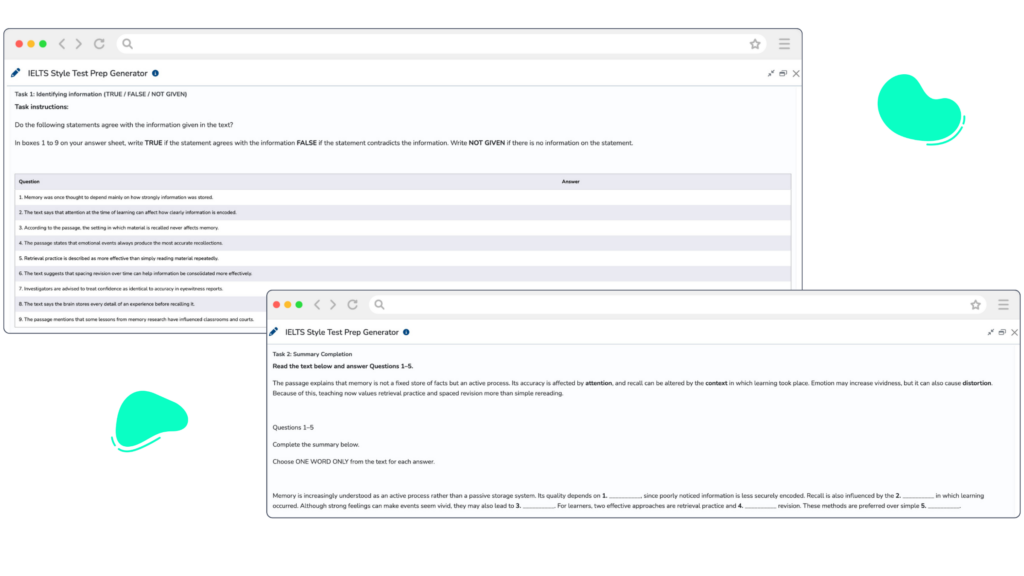
dseuling@avallain.com

Plan a Comprehensive and Impactful Course with TeacherMatic

The latest Language Teaching Takeoff webinar welcomed back educator and edtech specialist Nik Peachey, who explored how the TeacherMatic Language Teaching Edition can support the full cycle of planning: from course design to detailed lesson preparation, through to meaningful lesson wrap-ups that reinforce learning.

Plan a Comprehensive and Impactful Course with TeacherMatic

London, February 2026 – In ‘Plan Smarter and Teach with Confidence,’ Nik focused on course planning and its often time-intensive components. He demonstrated how teachers, academic managers and directors of studies can use TeacherMatic’s AI generators, including the ‘Scheme of Work / Curriculum Plan’ generator, to support this work while maintaining professional control.

Moderated by Giada Brisotto, Senior Marketing and Sales Operations Manager at Avallain, the session focused not only on planning but on developing it in greater detail, from course design through to fully structured lessons and effective wrap-ups.

Before Planning a Course 

Nik began by acknowledging the time-intensive nature of developing effective courses. He emphasised the importance of reducing repetitive preparation, building clear planning structures and aligning content with learner levels. To support this process, TeacherMatic provides AI tools for each stage of course development, enabling teachers to build structured plans while keeping content aligned with the CEFR.

He also demonstrated how generators can be quickly located using simple filter settings. Users can filter by task or role to surface the most relevant tools and favourite the ones they use most often, making the planning process more efficient.

Before moving into the generators themselves, Nik encouraged participants to consider lesson wrap-ups as part of the planning process. This step is often overlooked but plays an important role in reinforcing learning and supporting retention at the end of each lesson.

Creating a Course Plan

Nik opened the demonstration with the ‘Scheme of Work / Curriculum Plan’ generator, showing how users can plan a course for a specific group of learners. Using the Sustainable Development Goals as the course theme, he defined key topics, set the number of sessions to six and selected a table format at the B1 level. Additional details, such as learner age and optional support materials, were added to personalise the course further.

He also selected a pedagogical model, choosing Task-Based Learning, and showed how course creators can receive guidance on learning needs. The result was a clearly structured scheme of work presented in table form, with six session titles and supporting descriptions. Each session followed a task-based framework with pre-task, main task, post-task and wrap-up stages, and concluded with a review and action plan. 

Building Out Individual Lessons

Once a course plan is in place, each session needs to be developed in greater detail. A lesson outline alone is rarely sufficient, so the focus shifted to how the ‘Lesson Plan’ generator can expand a single session into a fully structured lesson. Nik demonstrated how to define a topic, clarify lesson aims, and set timing and a pedagogical model, all while keeping the lesson aligned with CEFR levels, skills and subscales.

The generated plan followed a clear, task-based structure. It was organised to include an introduction, main activity, language focus and summary, with suggested resources and homework. This provided a detailed foundation that could be refined and adapted, enabling teachers, academic managers and directors of studies to move from outline to delivery with greater confidence, while reducing preparation time. 

Reinforcing Learning as Part of the Plan

The final stage of the workflow focused on lesson wrap-ups. This is an area often overlooked in planning but essential for reinforcing learning and encouraging reflection.

Using the ‘Lesson Wrap-Up’ generator, Nik showed how teachers can set the topic, CEFR level and learner profile, as well as include specific learning needs or supporting materials. The generator then produces a range of structured activities designed to check understanding and prompt reflection. Activities included true-or-false checks, gap fills, discussion prompts and poster creation, which Nik noted was a particularly effective way for learners to reflect while engaging more creatively with the topic.

By building this final stage into the planning process, teachers can close lessons with purpose, allowing learners to review, reflect and retain key language while ensuring that each session connects clearly to the wider course.

From Big Picture to Lesson Reflection

A strong course considers each stage of the teaching process, from the initial structure through to the reinforcement of learning at the end of a lesson. Nik demonstrated how this full workflow can be supported within TeacherMatic, progressing from a course plan to detailed lesson planning and, finally, to lesson wrap-ups that consolidate learning.

With CEFR alignment embedded throughout, teachers can build from the big picture into individual sessions and then use additional generators to create supporting materials. Nik demonstrated how filters, such as ‘Speaking’ and ‘Reading’, can quickly identify relevant tools, enabling teachers to produce resources aligned with lesson objectives. Plans and materials can be saved and shared across a school account, supporting collaboration and reducing duplication. 

Together, this structured flow enables teachers, academic managers and directors of studies to plan with greater clarity, maintain professional control and ensure that each lesson contributes meaningfully to the wider course.

Explore the TeacherMatic Language Teaching Edition

For educators seeking greater clarity and consistency in planning, the TeacherMatic Language Teaching Edition provides CEFR-aligned generators to support course design, lesson development, course materials and lesson wrap-ups, with the flexibility to refine and adapt plans across contexts.

Discover more here

Next in the Webinar Series:

Inspire, Monitor, Motivate: Practical AI Tools for Everyday Teaching

? Thursday, 12th March
? 12:00 – 12:30 GMT | 13:00 – 13:30 CET

Join first-time guest host Pilar Capaul, language teacher and ELT content creator, for a practical session focused on real classroom use cases. 

Pilar will demonstrate how two TeacherMatic generators can support everyday teaching by drawing on examples from her own lessons. See how the ‘Did you do your homework?’ generator can be used to check understanding and completion, and how the ‘Inspiration!’ generator can spark motivation and engagement.

Click here to register and secure a spot


About Avallain

For more than two decades, Avallain has enabled publishers, institutions and educators to create and deliver world-class digital education products and programmes. Our award-winning solutions include Avallain Author, an AI-powered authoring tool, Avallain Magnet, a peerless LMS with integrated AI, and TeacherMatic, a ready-to-use AI toolkit created for and refined by educators.

Our technology meets the highest standards with accessibility and human-centred design at its core. Through Avallain Intelligence, our framework for the responsible use of AI in education, we empower our clients to unlock AI’s full potential, applied ethically and safely. Avallain is ISO/IEC 27001:2022 and SOC 2 Type 2 certified and a participant in the United Nations Global Compact.

Contact:

Daniel Seuling

VP Client Relations & Marketing
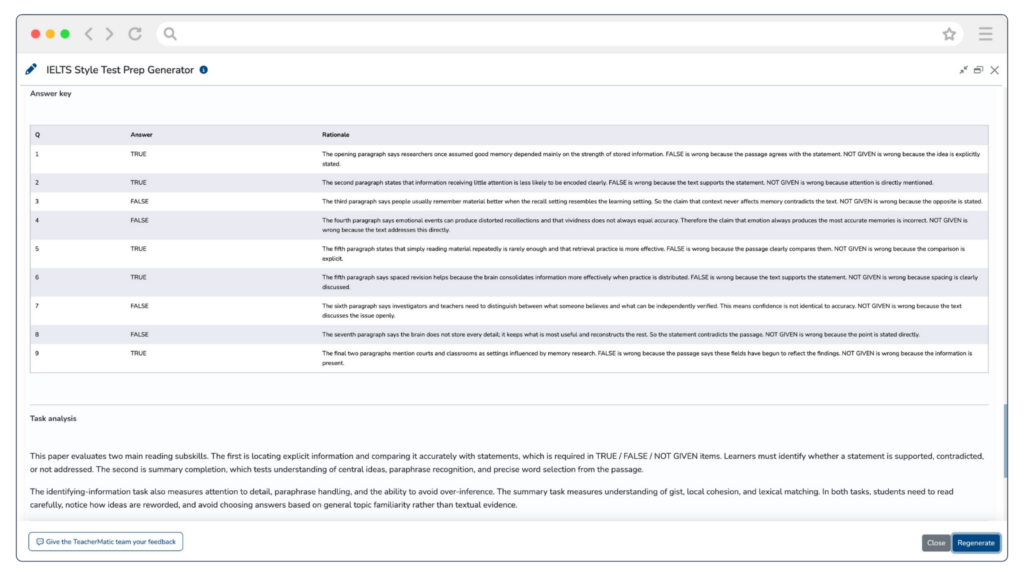
dseuling@avallain.com

York Press Selects Avallain Magnet and Avallain Author to Support International Programme Delivery

York Press, a long-established UK educational publisher with strong international reach, has selected Avallain Magnet to support the digital delivery of its educational programmes. The partnership strengthens York Press’s work with Ministries of Education, schools and institutional partners worldwide while enabling the publisher to extend its programmes internationally through scalable, high-quality digital learning delivery.

York Press Selects Avallain Magnet and Avallain Author to Support International Programme Delivery

St. Gallen, January 2026 – York Press has entered into a partnership with Avallain to use Avallain Magnet, our peerless and AI-integrated learning management system, as the digital learning platform for delivering its educational programmes across international markets.

A Publisher with Deep Roots and International Reach

Established in 1944, York Press has been active in educational publishing for more than 80 years. Headquartered in the UK, the company operates internationally across the public and private education sectors, with a strong track record of collaborating with institutional partners worldwide. 

York Press focuses on the development of learner-centred materials for English Language Teaching and school education, aligning pedagogical quality with local curricula and educational priorities.

The company is also widely recognised for its long-term partnership with Pearson UK through the York Notes revision guides for English Language and Literature.

What Avallain Magnet Enables for Educational Publishers

Avallain Magnet is a powerful and customisable end-to-end learning management system with AI-integrated technology. It enables publishers and education providers to deliver structured digital educational programmes while retaining control over content, pedagogy and learner experience.

Designed for deployment across institutions, regions and markets, Avallain Magnet provides the flexibility required to support different curricula, learner needs and delivery models. This makes it particularly suitable for international publishers such as York Press, which work with public-sector partners and operate across multiple geographies.

Supporting York Press’s Digital Strategy and Programme Expansion

Through the use of Avallain Magnet, York Press strengthens its ability to deliver programmes digitally to Ministries of Education and other institutional partnersworldwide. The platform also supports the publisher’s plans to deliver programmes internationally and consistently across markets beyond any single region.

Avallain Magnet enables York Press to scale digital delivery efficiently while ensuring consistency, accessibility and quality across markets. This allows programmes developed for specific educational contexts to be adapted and delivered reliably in different countries and learning environments.

In addition to Avallain Magnet, York Press is also implementing Avallain Author, our flexible, AI-powered authoring tool. This allows York Press to create publisher-grade learning content at scale, enabling rich interactivity, pedagogical consistency and efficient content production. Content created in Avallain Author is seamlessly delivered through Avallain Magnet, supporting an integrated workflow from content creation to programme delivery.

‘York Press’s partnership with Avallain further enhances its ability to deliver high-quality educational resources and services worldwide by leveraging Avallain’s innovative digital learning platform’, says Habib Sayegh, CEO of York Press.

A Long-Term Collaboration with Strategic Impact

The partnership is the result of several years of discussion and collaboration and represents a significant step in York Press’s digital development. By combining York Press’s publishing expertise, international credibility and institutional relationships with Avallain Magnet’s digital delivery capabilities, the collaboration establishes a strong foundation for sustainable growth and global reach.


About York Press

Founded in 1944, York Press has been at the forefront of international education for over 80 years. As a family-owned and operated company, we take pride in our rich history and our commitment to excellent education. We use our deep understanding of the evolving educational landscape to continue to innovate and adapt to meet the needs of educators and learners worldwide. Our expertise spans both public and private education sectors, offering a comprehensive range of services to Ministries of Education and the private education sector worldwide.

About Avallain

For more than two decades, Avallain has enabled publishers, institutions and educators to create and deliver world-class digital education products and programmes. Our award-winning solutions include Avallain Author, an AI-powered authoring tool, Avallain Magnet, a peerless LMS with integrated AI, and TeacherMatic, a ready-to-use AI toolkit created for and refined by educators.

Our technology meets the highest standards with accessibility and human-centred design at its core. Through Avallain Intelligence, our framework for the responsible use of AI in education, we empower our clients to unlock AI’s full potential, applied ethically and safely. Avallain is ISO/IEC 27001:2022 and SOC 2 Type 2 certified and a participant in the United Nations Global Compact.

Contact:

Daniel Seuling

VP Client Relations & Marketing
dseuling@avallain.com

Make Exam Preparation More Engaging and Effective

The first Language Teaching Takeoff Webinar of the year welcomed AI in education specialist and freelance teacher trainer Joanna Szoke, who explored how teachers can use the TeacherMatic Language Teaching Edition to create dynamic, engaging exam practice.

Make Exam Preparation More Engaging and Effective

London, January 2026 – In ‘Create Dynamic and Engaging Exam Practice for Your Students’, Joanna discussed assessment and feedback. She demonstrated how teachers can use the ‘Cambridge Style Exam Prep Generator’ and ‘Worksheet’ generator to produce targeted materials for learners preparing for high-pressure assessments.

Moderated by Giada Brisotto, Senior Marketing and Sales Operations Manager at Avallain, the session reinforced the importance of moving beyond assessment as simply a grade, positioning it instead as an opportunity to support learner progress and give teachers clearer insight into what to reinforce and revisit.

Assessment and Feedback

Joanna began by emphasising the close relationship between assessment and feedback, describing them as a continuous cycle rather than separate classroom tasks. When assessment is used as an ongoing process, it becomes a practical way to identify what learners understand, where they need further support and how teachers can adapt to meet those needs.

Rather than treating assessment as an endpoint, Joanna encouraged teachers to use it as a guide to strengthen learner progress and to ensure that feedback remains purposeful and actionable.

Exam English vs Real-Life English

Exam preparation can easily become focused on format and technique, but meaningful practice also needs to develop transferable communication skills. Joanna stressed the importance of connecting exam tasks to real-life language use. By making this connection, teachers ensure that learners can apply what they practise beyond the assessment setting.

Joanna explained how exam-style activities can be adapted to reflect authentic contexts and learner interests, keeping preparation engaging while still targeting the specific demands of the assessment. This approach supports both exam readiness and broader language development without compromising either.

Cambridge-Style Exam Practice in Action

To bring these ideas into a practical teaching context, Joanna demonstrated the ‘Cambridge Style Exam Prep Generator’ and how language educators can use it to create practice tasks aligned with Cambridge English levels A2 Key, B1 Preliminary, B2 First and C1 Advanced. Depending on the level selected, the generator supports different paper formats, including Reading and Writing at A2 Key, Reading at B1 Preliminary and Reading and Use of English at both B2 First and C1 Advanced.

Joanna highlighted how quickly teachers can generate exam-style materials, then refine them to suit their learners and classroom context. Teachers can adjust the topic, language focus or task demands to create more relevant practice and keep preparation adaptable. She also emphasised that these materials are intended solely for practice. Teachers should use them alongside official past papers and published exam preparation resources, with teacher review and adaptation remaining essential.

Flexible Worksheets for Targeted Practice

To build level-appropriate practice materials that can be adapted to different teaching contexts, Joanna also showcased the ‘Worksheet’ generator. Worksheets are a reliable format for reinforcing learning and checking understanding, particularly during assessment preparation.

The demonstration highlighted how teachers can generate worksheets on almost any topic, select activity types and adjust outputs to reflect learner profiles and specific needs. Teachers can also refine results further, remove suggested answers where appropriate and export content into editable formats for layout changes and added visuals. This flexibility makes it easier to create engaging, targeted practice while keeping teacher review and adaptation central.

Supporting Confident Exam Preparation

Effective exam preparation is not only about measuring performance. It is also an opportunity to strengthen learning through purposeful assessment, timely feedback and targeted practice that reflects real assessment demands.

With CEFR alignment built into the TeacherMatic Language Teaching Edition, teachers can generate level-appropriate materials that support structured preparation and classroom needs. By combining tools such as the ‘Cambridge Style Exam Prep Generator’ and the ‘Worksheet’ generator with professional judgement and refinement, teachers can create engaging practice that supports learner confidence and readiness when it matters most.

Explore the TeacherMatic Language Teaching Edition

Built for language teaching, the TeacherMatic Language Teaching Edition enables teachers to create CEFR-aligned materials for exam preparation, assessment, classroom practice and more, with flexibility to refine outputs for different learners and contexts.

Discover more here

Next in the Webinar Series:

Plan Smarter and Teach with Confidence

? Thursday, 12th February
? 12:00 – 12:30 GMT | 13:00 – 13:30 CET

Join award-winning educator Nik Peachey as he demonstrates how to use planning generators in the TeacherMatic Language Teaching Edition. See AI tools such as the ‘Scheme of Work/Curriculum Plan’ generator, which are designed to support teachers, academic managers and directors of studies in reducing repetitive preparation and creating structures that can be adapted to any teaching context.

Click here to register and secure a spot


About Avallain

For more than two decades, Avallain has enabled publishers, institutions and educators to create and deliver world-class digital education products and programmes. Our award-winning solutions include Avallain Author, an AI-powered authoring tool, Avallain Magnet, a peerless LMS with integrated AI, and TeacherMatic, a ready-to-use AI toolkit created for and refined by educators.

Our technology meets the highest standards with accessibility and human-centred design at its core. Through Avallain Intelligence, our framework for the responsible use of AI in education, we empower our clients to unlock AI’s full potential, applied ethically and safely. Avallain is ISO/IEC 27001:2022 and SOC 2 Type 2 certified and a participant in the United Nations Global Compact.

Contact:

Daniel Seuling

VP Client Relations & Marketing
dseuling@avallain.com

This site is registered on wpml.org as a development site. Switch to a production site key to remove this banner.